
Alzheimer's Awareness Month
January is Alzheimer's Awareness Month in Canada. Learn what that means and how you can get involved.
Forget No One, because no one should face dementia alone.
Dementia remains the health crisis Canadians avoid, even as concern continues to rise.
Over half of Canadians shared how they’re worried about developing Alzheimer's disease or another form of dementia, and two-thirds would worry about losing their independence if diagnosed.*
Even more troubling, a quarter of Canadians say they would rather not know if they had dementia.*
This is stigma, and it delays diagnosis, limits access to support, and isolates people who need connection the most.
“Make the call. You can cut your fear and anxiety in half by connecting to the Alzheimer's Society. The person at the other end of the phone has answered similar calls hundreds of times. They know what they’re doing.” - Fred K.
Each January, the Alzheimer Society supports and leads Canada's Alzheimer's Awareness Month to encourage people across Canada to learn more about dementia and its impact.
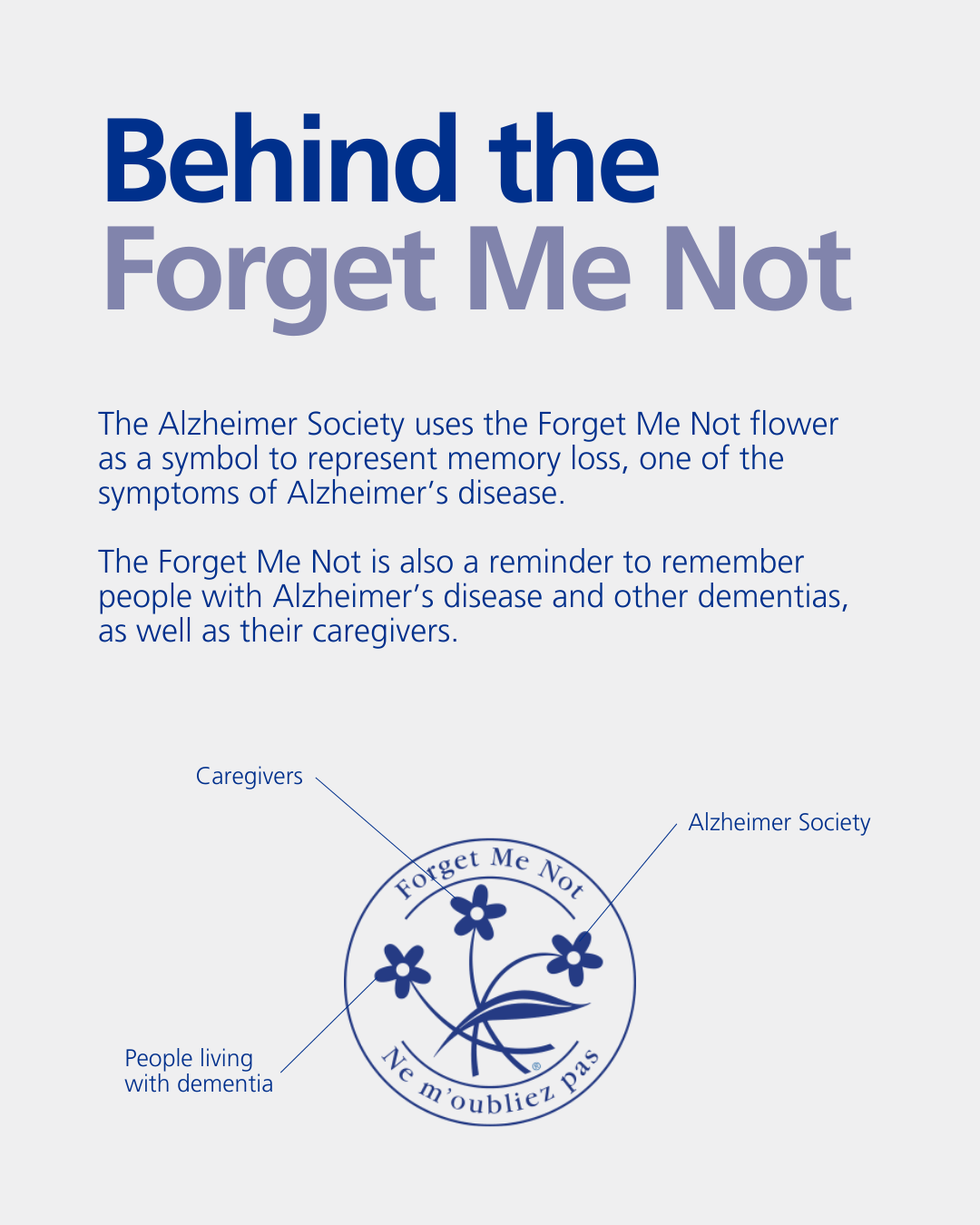
This year, for Alzheimer's Awareness Month, Alzheimer Societies across Canada are showing up with the Forget Me Not flower as a reminder to Forget No One – because no one should face dementia alone. Too many people don’t know where to go for help, but we’re raising our hand to remind Canadians that we’re here to help.
“The Forget-Me-Not is our symbol of hope, but the real action is in connection,” said Christina Scicluna, Chief Executive Officer at the Alzheimer Society of Canada. “We want Canadians to know that support is available and connection is possible.”
“My dad struggled to be honest about his concerns during medical appointments because he worried about how my mom would react afterward. If he mentioned anything about her memory or behaviour in front of her, she sometimes became upset or angry later, so he often held back. My Mom's denial of her symptoms made reaching out even harder. Even when the changes were clear, she insisted nothing was wrong.” - Fe W.
“Forget No One”
Join us on Wednesday, January 28, 2026 to show your support and combat stigma by sharing messages of support and engaging in dialogue around dementia. Be sure to use the hashtag #ForgetNoOne and tag us @AlzheimerCanada.
Together, we can replace silence with support and stigma with hope, ensuring no one faces dementia alone today and a future without dementia tomorrow.
Dementia Stigma in Canada
By 2030, researchers project that nearly 1 million people in Canada could be living with dementia.
As of 2050 researchers estimate that the number of people living with Alzheimer’s disease will double in Quebec. (passing 170 000 in 2020 to 360 000 in 2050)**
** For more information, consult the Alzheimer Canada Landmark study
Awareness is the first step to fighting stigma, combined with advocating for human rights and pushing for policy change through the national dementia strategy.
Stigma against dementia encompasses any negative attitude or discriminatory behaviour against people living with dementia, based on their condition or diagnosis. When a disease is as prevalent as dementia, yet still poorly understood, it's easy for false beliefs to spread.
“Living with dementia is about more than challenges. It's about resilience, creativity, and hope. By seeing strengths and expanding possibilities, we can change the way the world views dementia – and show that life after a diagnosis can still be meaningful and full of purpose.” -Mario G.
*Source
Leger is the largest Canadian-owned full-service market research firm. An online survey of 1,606 Canadians aged 18+ was completed between November 7-10, 2025, using Leger’s online panel. Leger's online panel has approximately 400,000 members nationally and has a retention rate of 90 per cent. A probability sample of the same size would yield a margin of error of +/- 2.45 per cent, 19 times out of 20.
Additional Resources
10 easy ways you can fight stigma against dementia
The Canadian Charter of Rights for People with Dementia
Become a member of our Advisory Group of people living with dementia
How to get a dementia diagnosis: Ways to prepare and what to expect.